1. Touchless Nightly Billing Batches & Auto-Compressed BOL/POD Packets
In traditional carrier offices, billing clerks open every delivered load by hand, hunt through shared email inboxes for driver POD photos, resize oversized PDFs so shipper AP servers do not bounce them, verify whether the customer requires a lump-sum or itemized fuel line, and type invoice totals into an external accounting package.
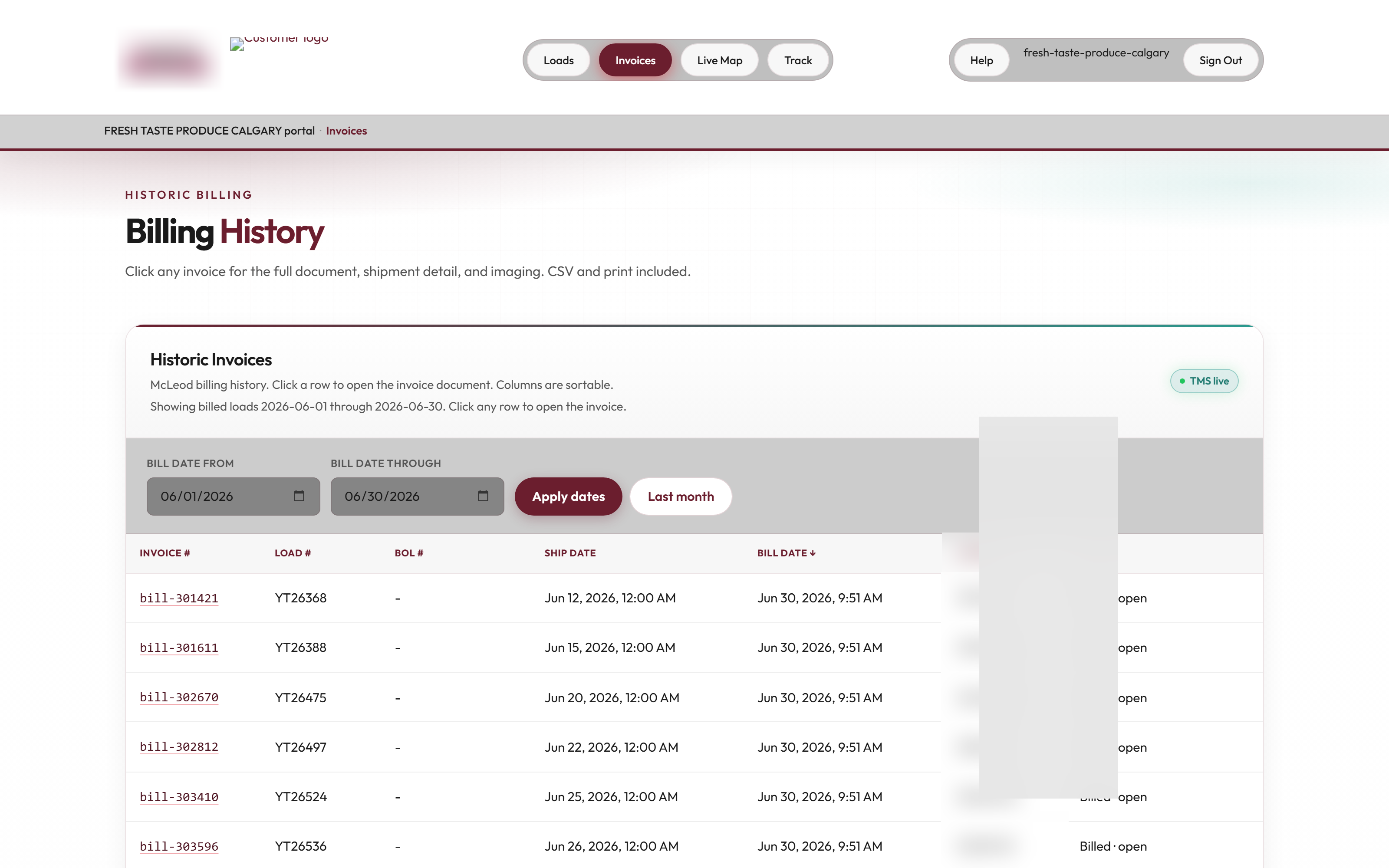
EXSPEEDITE TMS automates clean loads straight through to customer delivery without losing controller oversight. When a trip finishes in Fast Dispatch or via CheckPoint, drivers capture the signed BOL/POD straight onto the shipment record. EXSPEEDITE auto-compresses document images for fast, lightweight PDF packet assembly and secure link sharing via Pipeline. Every night, the billing engine sweeps delivered loads against customer-specific requirements: loads meeting 100% of billing gates invoice automatically; loads missing a required document or unapproved accessorial route straight into an actionable billing exception queue.
2. EDI 210 Pre-Send Validation Gates
Large retail, manufacturing, and 3PL accounts pay through automated EDI 210 freight invoice clearinghouses. One missing purchase order number, invalid accessorial code, or mismatched SCAC triggers a silent EDI rejection that pushes payment out by 30 days. EXSPEEDITE's EDI 210 pre-send gates enforce trading-partner schema rules inside the TMS before transmission, pairing outbound EDI 210 invoices with inbound EDI 997 functional acknowledgments and linked BOL/POD imaging.
3. QuickBooks Online OAuth2 REST & Sage Intacct Dimensional GL Sync
Accounting integrations fail when they treat financial synchronization as a blind one-way CSV dump. EXSPEEDITE TMS provides direct API integrations engineered for real carrier and brokerage controllers:
| Control Layer | QuickBooks Online (OAuth2 REST API) | Sage Intacct (Dimensional Web Services) |
|---|---|---|
| Supported Transactions | Approved customer AR invoices, carrier AP bills, driver/contractor payables, and credit memos. | Multi-entity AR invoices, AP bills, dimensional revenue/expense splits, and credit adjustments. |
| GL & Dimensional Mapping | Maps linehaul, fuel surcharge, accessorials, and purchased transport to configured QBO items & accounts. | Maps line items across entity, office, terminal, equipment class, and customer dimensions. |
| Idempotency & Retry Safety | Stores QBO transaction reference ID back on the EXSPEEDITE shipment to block duplicate posts on timeout. | Records Sage Intacct document key on the TMS object and surfaces validation errors to an audit queue. |
| Reconciliation Ownership | Single-record tie-out from original dispatch leg and POD packet straight to QBO ledger entry. | Controller-ready tie-out across offices and legal entities without spreadsheet staging tables. |
4. Automated Driver Settlements, Escrow Deductions & Fuel Card FTP Imports
Driver retention depends on accurate, transparent settlements delivered on time every pay cycle. Because EXSPEEDITE TMS captures company driver and owner-operator trip legs natively from Fast Dispatch and Gate Moves TIR, Driver Settlements compute compensation without manual pay-sheet assembly:
- Flexible pay structures: Loaded vs empty mileage splits, percentage of gross or net linehaul, hourly city cartage, stop-off pay, detention, layover, tarping, and per-move intermodal leg rates.
- Recurring deductions & escrow: Tractor lease payments, maintenance escrow balances, insurance deductions, occupational accident coverage, and amortized advances tracked automatically across pay periods.
- Automated fuel card FTP imports: Ingests carrier fuel card transaction files to match fuel purchases and cash advances to driver settlements while simultaneously feeding multi-jurisdiction IFTA tax preparation.
- 1-Click Pay Stubs: Generates itemized driver settlement statements linking every dollar directly back to shipment numbers, pickup/delivery dates, and deduction balances.
5. Exception Queues, Credit Memos & Audit Traceability
Evaluating freight transportation software AI requires testing what happens when something goes wrong: a short-paid detention claim, a missing consignee signature, an expired QBO OAuth token, or a mid-week credit and rebill. EXSPEEDITE retains full timestamped change logs across rate overrides, document approvals, billing holds, and ERP sync retries so finance can trace every ledger dollar back to the original freight movement.
Continue Exploring the EXSPEEDITE Logistics AI Platform
- Freight Transportation Software AI Hub
- Logistics AI Platform Pillar
- 10 Best AI Tools for Transportation Logistics
- AI Freight Dispatch & Dynamic Rating
- AI Freight Brokerage & CheckPoint Visibility
- AI Intermodal Drayage & Demurrage Defense
- 20-Point Evaluation Checklist
- Freight Transportation Software Guide
- Superintelligence Freight Transportation
Frequently Asked Questions: AI Freight Billing & Accounting Automation
How do touchless nightly billing batches work in EXSPEEDITE TMS?
EXSPEEDITE TMS evaluates delivered shipments against each customer's configured billing rules: verified rating totals, required reference or PO numbers, mandatory BOL or signed POD attachments, and approved accessorials. Loads passing every gate enter automated nightly billing batches, assemble compressed invoice packets, deliver invoices via email, Pipeline, or EDI 210, and hold incomplete loads in a clear exception queue.
How does EXSPEEDITE TMS prevent duplicate postings during QuickBooks Online or Sage Intacct sync?
EXSPEEDITE TMS synchronizes approved customer invoices, carrier payables, and credit memos over direct QuickBooks Online OAuth2 REST APIs or Sage Intacct dimensional web services and writes the returned accounting transaction ID back onto the TMS record. Retry logic checks existing synchronization references and routes rejected mappings to an auditable finance exception queue rather than silently posting duplicate ledger entries.
What are EDI 210 pre-send validation gates?
EDI 210 pre-send gates validate mandatory trading-partner segments before transmission — including bill-of-lading numbers, purchase order references, SCAC codes, approved EDI accessorial charge codes, and required POD imaging — preventing 997 or 824 rejections that stall shipper AP payment cycles.
Why does auto-compressed BOL and POD imaging matter for freight billing?
Drivers frequently capture multi-megabyte smartphone photos of bills of lading and delivery receipts that bounce off customer AP mailboxes or bloat database storage. EXSPEEDITE TMS automatically compresses and optimizes uploaded BOL and POD images while preserving legibility, bundling clean PDF invoice packets and offering secure link sharing through Pipeline.
How does EXSPEEDITE automate driver settlements and fuel card deductions?
Driver Settlements calculate loaded and empty mileage splits, percentage of revenue pay, hourly rates, stop-off pay, detention, and recurring escrow or lease deductions straight from dispatched trip legs. Automated fuel card FTP imports match tractor and driver advances directly to the pay period and flow into 1-click driver pay stubs while feeding IFTA fuel reconciliation.
Can multi-entity carrier and brokerage groups map separate general ledgers in Sage Intacct or QuickBooks Online?
Yes. EXSPEEDITE TMS maps revenue accounts, purchased transportation expense accounts, office or entity dimensions, and customer/vendor identifiers according to configured legal-entity rules, enabling controllers to reconcile multi-office carrier and brokerage operations without manual CSV journal re-uploads.